
FOOT INCLINATION ANGLE
HEEL STRIKE
Generally, a heel strike is correlated with overstriding and low cadence.
Excessive heel striking causes increased ground reaction forces (GRF) that the body must dissipate. These increased GRFs often lead to common overuse injuries such as patellofemoral pain syndrome (runner’s knee), tibial stress fractures, and increased loading through the hip and low back due to the foot landing in a “stiffer” position in front of the body.
A heel strike is not necessarily a bad thing; it is the combination of a heel strike along with a large heel-to-COM distance that can create a “perfect storm” for injuries.
COMMON CAUSES OF HEEL STRIKING:
EXERCISES
See “Heel-to-COM” page for information on cadence work.
FOREFOOT
With a forefoot foot inclination-angle, the ball of the foot makes contact with the ground before the heel.
A forefoot strike can be very helpful for runners with knee pain but can lead to other issues such as increased potential for achilles tendonitis, plantar fascia pain, metatarsal stress fractures, and turf toe-type irritations.
COMMON CAUSES OF FOREFOOT STRIKING:
Tight calves
Low/zero drop shoes
EXERCISES
In general, if you have a forefoot striking pattern, you want to make sure you maintain mobile calf muscles and strong intrinsic muscles of the feet to prevent plantar fascia pain and counteract any excessive tightness of the calf muscles.
Knee-to-Wall Ankle Mobilizations/Calf Stretching
Start with your foot about ½ a foot away from the wall and lean forward to tap your knee to the wall
Pull your foot back/push your foot forward to find the right distance from the wall where you can just barely tap the wall without your heel coming up off the ground
You should feel a stretch in the back of your calf/ankle
Hold your knee to the wall for 2-3 seconds and then back off
The goal of this exercise/mobilization is to increase your ankle mobility/achilles flexibility so you can pull your foot further back from the wall but still tap your knee
Best to do this exercise with your shoes OFF
Gastroc Stretch
Put your affected leg back and lean your front knee forward while keeping your back heel down on the ground.
Back knee is STRAIGHT
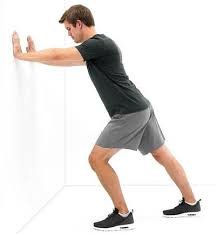
Soleus Stretch
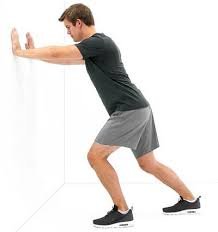
Put your affected leg back and lean your front knee forward and drive your back knee down while keeping your back heel on the ground
Back knee is BENT
TOE YOGA
Standing on both feet, lift both of your big toes up off the floor while pushing the four smaller toes down into the floor, and then switch. Push your big toes down into the floor and lift the other four toes up.